From Blueprint to Byteprint: The Quiet Revolution in Furniture Design
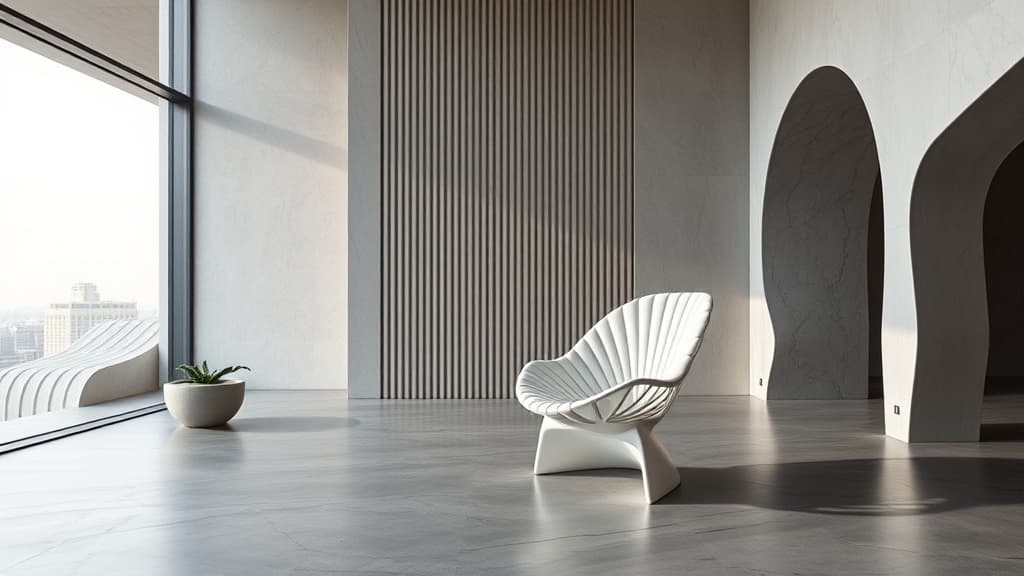
The familiar journey of a chair—from a designer's sketch, to a prototype, to mass production in a distant factory—is being quietly rewritten. In design studios and fabrication labs, a new paradigm is emerging, one where form is no longer constrained by traditional manufacturing limits, and sustainability is woven into the process from the very first digital line. This isn't about a single chair; it's about a fundamental shift in how we conceive, create, and consume the objects that furnish our spaces.
At the heart of this shift lies the convergence of parametric design and additive manufacturing. Parametric software allows designers to work with complex, organic algorithms, generating forms that mimic natural structures—the efficiency of a honeycomb, the strength of a bird's bone, the fluidity of a river stone. These are shapes that were once impossible to build, deemed too expensive or intricate for woodworking or metal molding. Now, they exist as digital blueprints, waiting to be materialized. 3D printing, or additive manufacturing, provides the key. Layer by meticulous layer, it translates these complex digital geometries into physical reality, bridging the gap between the virtual and the tangible with unprecedented fidelity.
This technological synergy unlocks a new aesthetic language for interior design. The resulting forms are often voluptuous, sinuous, and deeply sculptural. They challenge the rectilinear tyranny of much modern furniture, inviting touch and provoking curiosity. A chair is no longer just a place to sit; it becomes a focal point, a piece of kinetic architecture on a domestic scale. Its flowing lines can soften a minimalist interior or add an element of futuristic art to a classic setting. For architects and interior designers, this offers a powerful new tool for creating bespoke, site-specific pieces that respond directly to the curves of a wall, the flow of light, or the unique narrative of a space.
Yet, the revolution is not merely formal. Perhaps its most profound impact is environmental. The same digital precision that creates breathtaking forms also enables a radical reduction in waste. Traditional subtractive manufacturing carves objects out of larger blocks, leaving behind substantial material scraps. Additive manufacturing, in contrast, uses only the material needed to build the form. This efficiency is supercharged when paired with recycled feedstocks. Imagine plastic bottles, discarded fishing nets, or industrial waste being ground, processed, and fed into a printer, emerging reborn as a durable, beautiful piece of furniture. This closes the material loop, transforming the linear 'take-make-dispose' model into a circular one. It imbues objects with a story—a narrative of redemption that adds depth and meaning to their aesthetic appeal.
For the architecture and design community, this matters profoundly. It represents a move towards greater agency and responsibility. Designers are no longer just specifiers of products from catalogues; they can become direct manufacturers, controlling the entire process from concept to creation. This allows for localized production, reducing shipping emissions and supporting local economies. It democratizes design innovation, allowing smaller studios to experiment with forms that were once the exclusive domain of large manufacturers with costly molds.
Furthermore, it aligns design practice with urgent global imperatives. Specifying furniture made from recycled materials through low-waste digital fabrication is a tangible step toward reducing a project's embodied carbon. It allows clients and designers to make ethical choices without sacrificing beauty or innovation. In an era of climate consciousness, this ability to merge aesthetic ambition with ecological integrity is not just a trend—it's becoming a core competency and a moral imperative.
Of course, challenges remain. Scaling these processes for broader accessibility, ensuring long-term durability of new material composites, and navigating the economic realities are all part of the ongoing conversation. But the direction is clear. The fusion of digital design and sustainable fabrication is moving from the periphery of avant-garde experiments to the center of contemporary practice. It promises a future where our interiors are furnished with objects that are not only visually captivating but also intellectually and environmentally conscientious—a future where every curve tells a story of both algorithmic elegance and planetary care.
Read Also

From Gallery to Living Room: Borrowing Design Confidence from Public Spaces
Discover how the bold confidence of museum galleries and boutique hotels can be distilled into practical principles for designing a home that feels both inspired and authentically yours.
Living in Layers: A Practical Strategy for Building a Home You'll Love for Years
Building a timeless home isn't about chasing trends. Discover how a layered, intentional approach to furnishing creates a deeply personal and adaptable space that evolves with you.

The Essential Triad: How Material, Light, and Detail Elevate a Showcase
In furnishing and design, it is the considered interplay of substance, illumination, and the finishing touch that transforms a room from a collection of items into a cohesive, compelling environment.