The Policy Blueprint: How Legislation Becomes the Architect's Unseen Client
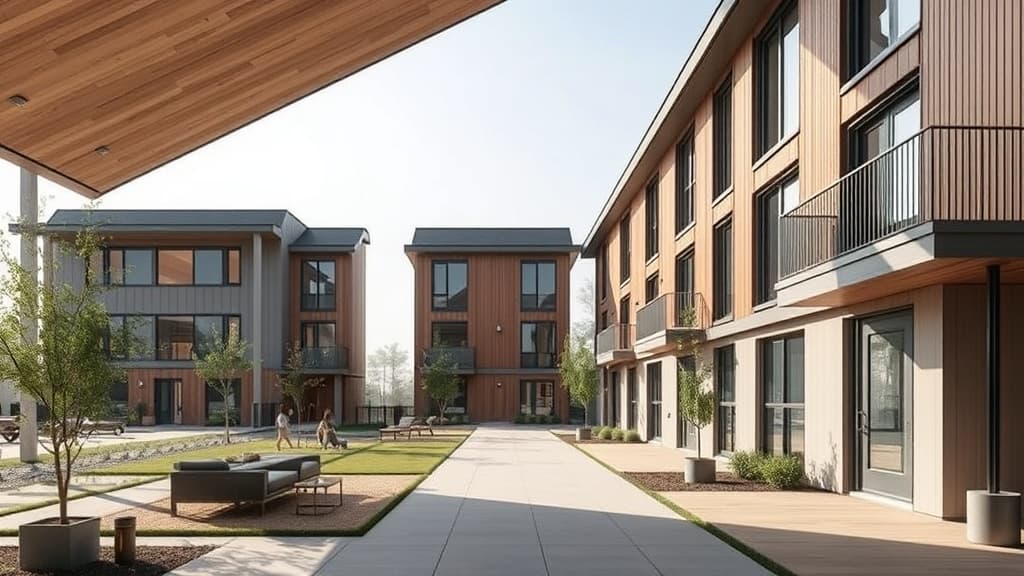
In the quiet corridors of legislative power, far from drafting tables and material samples, a new kind of blueprint is being drawn. It doesn't specify load-bearing walls or window placements. Instead, it outlines pathways, incentives, and regulatory frameworks. The recent passage of the 21st Century ROAD to Housing Act in the United States is not merely political news; it is a direct, forceful brief issued to the entire architectural community. It represents a fundamental shift in the client-architect dynamic, where the government, through policy, becomes architecture's most influential—and often most invisible—client. This transformation asks a profound question of our profession: when the rules of the game are rewritten by law, how must our design thinking evolve?
For decades, the conversation around affordable housing in architectural circles often centered on material innovation, modular construction, or stylistic minimalism—solutions born in the studio and applied to the site. While valuable, this approach operated within a fixed ecosystem of zoning laws, financing hurdles, and approval timelines that could strangle even the most elegant solution. The new legislative movement, epitomized by the ROAD Act, flips this script. It doesn't ask architects to design a cheaper unit; it attempts to redesign the process itself. By streamlining permitting, incentivizing adaptive reuse of commercial spaces, and potentially unlocking federal land, the law effectively hands architects a new set of tools and a wider, less obstructed plot of land on which to build. The constraint shifts from 'how to build cheaply under old rules' to 'what can we now imagine under new ones.'
This legislative client relationship is complex and carries unique responsibilities. The government, as client, provides not a private vision but a public mandate: equity, speed, scalability, and community integration. This mandates a move beyond the bespoke and towards the systemic. Architectural practice must now engage deeper with urban economics, demographic data, and long-term community stewardship. The iconic, stand-alone project becomes less the goal than the creation of repeatable, adaptable, and context-sensitive housing typologies that can be deployed across different regions and cultures. It calls for a mastery of logistics and supply chains as much as form and light. The architect's role expands from designer of objects to orchestrator of a delivery system for dignity and shelter.
For interior designers and specialists, the implications are equally transformative. Policy-driven housing projects prioritize efficiency and durability, but they must never succumb to austerity. This is where interior design's human-centric philosophy becomes critical. The challenge is to inject identity, warmth, and sensory richness into spaces that are also cost-effective and easy to maintain. It demands innovative thinking about multi-functional fixtures, resilient yet beautiful surface materials, and layouts that foster privacy and community simultaneously. The interior becomes the primary site where policy intention—affordability—meets human experience—a sense of home. Designers become the essential translators of legislative goals into daily lived reality.
From a global perspective, the American legislation is a notable experiment in a worldwide crisis. From the ambitious housing programmes in Vienna to the adaptive reuse mandates in Barcelona, cities are using policy levers to shape their architectural futures. The lesson for our bilingual readership, spanning from North America to the Middle East, is universal: architectural innovation is increasingly inseparable from civic innovation. The most profound design solutions of this century may not emerge solely from a visionary's sketch, but from a collaborative dialogue between creative minds and the policymakers who shape the ground rules.
Ultimately, acts like the ROAD to Housing Act do not diminish the architect's creative agency; they redefine its arena. The greatest design constraint has always been the brief. Now, a significant part of that brief is being written in the language of law. To ignore this is to work on a partial drawing. To engage with it is to accept a more complex, collaborative, and ultimately more impactful role: as a co-author, not just of buildings, but of the very frameworks that make a just and beautiful built environment possible. The future of housing will be designed in studios, but it will be enabled—or disabled—in legislatures. Our profession's task is to ensure it's the former.
Read Also

Interior Design Trends 2027: 8 Practical Directions
We explain the key interior design trends for 2027 with specific examples you can use in your home.

The Palette in Practice: How Global Trends Translate into Local Spaces
Weekly color and design trends move from digital inspiration boards into real-world interiors. We explore how global movements are being adapted in homes from Beirut to Dubai.

Weekly Design & Color Trends: Practical Tips for Homeowners
Our weekly trend report is your cheat sheet for effortlessly weaving the latest colors and design movements into your home, with actionable steps to make your spaces feel fresh.