The Rule Book: How Architectural Logic is Quietly Reshaping Furniture
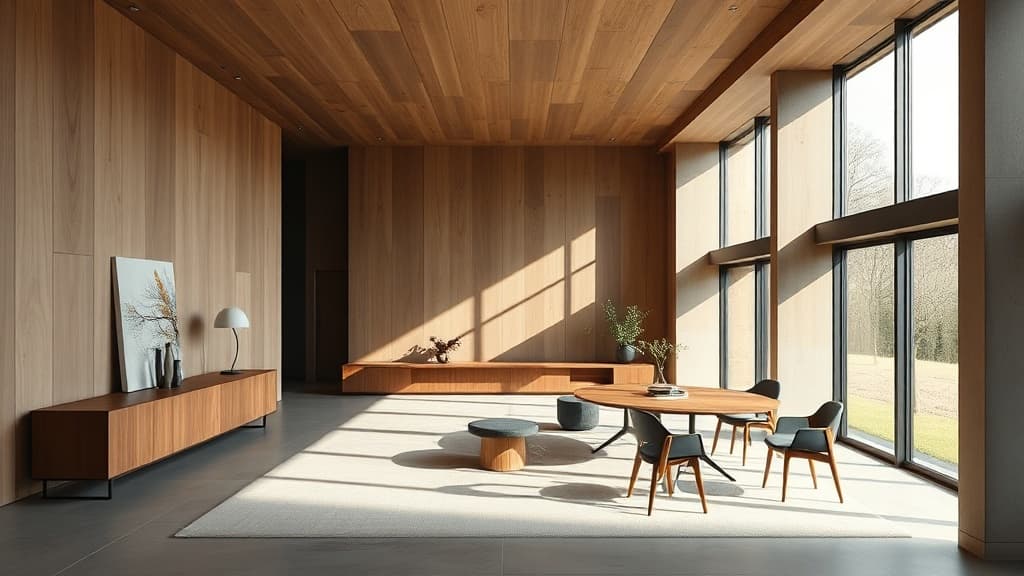
In architecture, the most profound ideas are often systematic. They are not about a singular, iconic gesture, but about establishing a clear, generative order—a set of principles that can be repeated, adapted, and scaled without losing their core identity. Think of the structural grid of a skyscraper, which can house offices, apartments, and galleries; or the modular facade system that can respond to different orientations and views. This is the deep logic of architecture, where coherence emerges not from uniformity, but from a shared, underlying framework.
This same systematic thinking is now making a decisive, if quiet, journey from the scale of the building to the scale of the room. A new wave of design treats furniture not as a series of isolated, individual statements—a heroic chair here, a sculptural table there—but as an integrated ecosystem. It asks: what if a desk, a shelf, a partition, and a storage unit were all born from the same structural DNA? What if they shared not just a material or a colour, but a fundamental geometric and proportional logic? The result is not a matching set in the traditional sense, but a family of objects that speak the same architectural language.
This approach represents a fundamental shift in perspective. For too long, furniture design in architectural practice has oscillated between two poles: the bespoke, one-off masterpiece that is an extension of a building's form, and the off-the-shelf procurement of anonymous pieces. The systemic model proposes a third way. It leverages the architect's primary skill—conceiving coherent systems—and applies it to the landscape of use. A single, robust joint detail can define the connection for a table leg, a bookcase upright, and a room divider. A consistent module can govern the width of a drawer, the depth of a shelf, and the seat of a stool.
Why does this matter for interior design? First, it cultivates a profound sense of spatial harmony. When the furniture is derived from the same principles that might organize the room's layout or lighting, the interior ceases to feel like a collection of items placed within a container. Instead, it becomes a unified field, a continuous experience where every element feels inherently 'at home'. This reduces visual noise and creates environments of calm intentionality.
Second, it reintroduces longevity and adaptability. Furniture systems built on logic, rather than fleeting style, possess an inherent flexibility. Components can be reconfigured, extended, or repaired because their logic is transparent and consistent. This is sustainability in its truest sense: designing not for disposal, but for evolution. It empowers the inhabitant to become a co-author of their space over time.
Finally, it re-centers the narrative on the process of making and thinking, rather than merely on form. For the architect, it is a return to first principles—structure, connection, and sequence. For the user, it offers a subtle but tangible connection to the intelligence embedded in their surroundings. The chair is no longer just a place to sit; it is a direct expression of the structural clarity that also defines the room, and perhaps the building itself.
This is more than a trend; it is a reclamation of architectural thinking at a human scale. It suggests that the true power of a good design idea lies not in its static appearance, but in its generative potential. By applying the rule book of architecture—its love of grid, module, proportion, and structural honesty—to furniture, we are not just designing objects. We are designing a framework for living, one coherent, adaptable piece at a time. The future of integrated interiors may well be written not in bold forms, but in the elegant, repeating logic of a single, well-conceived rule.
Read Also

From Gallery to Living Room: Borrowing Design Confidence from Public Spaces
Discover how the bold confidence of museum galleries and boutique hotels can be distilled into practical principles for designing a home that feels both inspired and authentically yours.
Living in Layers: A Practical Strategy for Building a Home You'll Love for Years
Building a timeless home isn't about chasing trends. Discover how a layered, intentional approach to furnishing creates a deeply personal and adaptable space that evolves with you.

The Essential Triad: How Material, Light, and Detail Elevate a Showcase
In furnishing and design, it is the considered interplay of substance, illumination, and the finishing touch that transforms a room from a collection of items into a cohesive, compelling environment.