Quartz vs Granite Countertops: A Practical Comparison
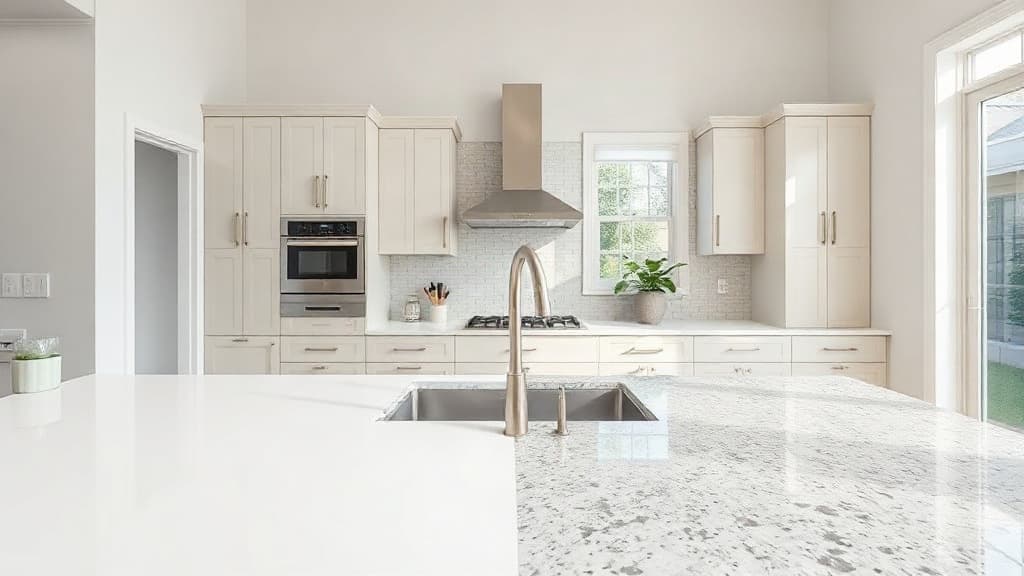
Choosing between quartz and granite for your kitchen countertops is a common decision. Each material has distinct advantages in durability, appearance, and maintenance. This guide compares them directly to help you decide which is best for your home and lifestyle.
Composition and Appearance
Granite is a 100% natural stone quarried from the earth. Each slab is unique, with natural veining, specks, and color variations that can be dramatic. Quartz countertops are engineered surfaces made from approximately 90-95% ground natural quartz crystals mixed with 5-10% polymer resins and pigments. This process allows for a vast range of consistent colors and patterns, including convincing marble-look designs that don't have the natural stone's weaknesses. The visual choice comes down to personal preference. If you want a one-of-a-kind, natural look with movement, granite offers that. If you prefer a more uniform, predictable appearance or want a specific solid color not found in nature, quartz provides that control. A common mistake is choosing a busy granite pattern for a small kitchen, which can make the space feel chaotic.
Durability and Hardness
Both materials are very hard and durable for kitchen use. On the Mohs scale of mineral hardness, granite typically ranks between 6 and 7, while quartz ranks around 7. This means both resist scratches from knives and everyday utensils well. However, you should always use a cutting board to protect the finish of either surface. The key difference lies in impact resistance. Granite, being natural, can have microscopic fissures. A sharp, heavy impact on an edge or corner can potentially cause a chip or crack. Quartz, bound by resin, is generally more flexible and resistant to chipping from similar impacts. Neither material is indestructible; dropping a cast iron pan from height will likely damage both.
Heat Resistance
Granite has superior heat resistance. It is formed under extreme heat and pressure within the earth, so it can withstand brief contact with hot pots and pans without damage. You can place a hot saucepan directly from the stove onto a granite countertop. However, repeated thermal shock—sudden extreme temperature changes—can still stress the stone over time. Quartz countertops contain polymer resins, which can be damaged by high heat. Exposure to temperatures above 150°C (302°F) can cause the resin to discolor, melt, or create a permanent cloudy spot called a "heat scar." You must always use trivets or hot pads under hot cookware on a quartz surface. This is a critical daily habit for quartz owners.
Stain Resistance and Sealing
Quartz is non-porous due to the resin binder, so it does not require sealing and is highly resistant to staining from common kitchen liquids like oil, wine, coffee, and juice. Spills wiped up in a reasonable time will not leave a mark. Granite is a porous natural stone. While dense, it can absorb liquids if left untreated, leading to stains. Therefore, granite requires an initial sealing upon installation and typically needs resealing every 1 to 3 years, depending on the specific stone's porosity and usage. A simple water test can indicate when resealing is needed: if water droplets bead on the surface, the seal is good; if they soak in darkening the stone within a few minutes, it's time to reseal. Forgetting to reseal granite is a common oversight that leads to permanent stains.
Maintenance and Cleaning
Both surfaces are easy to clean for daily maintenance. Use a soft cloth, mild dish soap, and warm water. Avoid abrasive cleaners or scouring pads, which can dull the polished finish. For quartz, avoid cleaners containing bleach or high pH levels, as they can degrade the resin over many years. For tougher stains on granite, a paste of baking soda and water can be used as a gentle poultice. For quartz, a non-abrasive cleaner designed for solid surfaces is safest. A significant advantage of quartz is that it never needs the periodic resealing that granite does, making its long-term upkeep slightly simpler.
Cost Comparison
The cost of both materials is comparable and varies by quality, brand, and slab selection. On average, expect to pay between $60 to $120 per square foot installed for both quartz and granite. Entry-level options for both exist, and premium, exotic granites or high-end quartz brands can exceed $150 per square foot. The installed cost includes the slab, fabrication (cutting, edge profiling), and installation. Intricate edge profiles like ogee or waterfall edges add to fabrication costs for both materials. Always get a final, all-inclusive quote from your fabricator. A common budgeting mistake is comparing slab prices without factoring in fabrication and installation, which are significant parts of the total cost.
Edge Profiles and Installation
Both materials can be fabricated with a wide variety of edge profiles, from simple eased or pencil edges to more elaborate bullnose, bevel, or ogee edges. The choice of edge is primarily aesthetic and does not differ functionally between the two materials. Standard countertop thickness is 3 cm (1.25 inches), though 2 cm (0.75 inch) material is sometimes used with a built-up edge to appear thicker. Installation is similar for both: trained professionals template your kitchen, cut the slab, and install it on level cabinets. The weight is comparable. Proper support is crucial, especially for overhangs longer than 25 cm (10 inches) for any countertop material, which typically requires additional brackets or corbels.
Environmental and Health Considerations
Both have environmental trade-offs. Granite involves quarrying, which has a landscape impact, and long-distance transportation. Quartz production is energy-intensive due to the manufacturing process. Some quartz brands now incorporate recycled materials. For indoor air quality, quartz has an advantage as its non-porous surface does not harbor bacteria, mold, or mildew. Granite is also hygienic when properly sealed. Some historic concerns about radon emissions from granite have been largely dispelled by health agencies, which note that levels are typically negligible compared to background environmental radon. For a truly seamless look with minimal grout lines, explore more Countertops & Counter Surfaces ideas on our site.
Resale Value and Longevity
Both quartz and granite are considered premium upgrades that add value to a home. There is no clear consensus that one material consistently offers a higher return on investment than the other; it depends on local market preferences. The key is to choose a quality, neutral material with professional installation. With proper care, both materials will last the lifetime of your kitchen. Damage usually occurs from misuse, not normal wear. A timeless, neutral color palette tends to appeal to future buyers more than very bold, trendy colors in either material.
Looking for more? Browse more Countertops & Counter Surfaces ideas.
Key takeaways
Quartz is non-porous, requires no sealing, and offers consistent colors but is vulnerable to high heat. Granite is heat-resistant and uniquely natural but requires periodic sealing to prevent stains. Both are equally durable for daily use and carry similar costs. Your choice should balance your preference for natural variation versus controlled design and your willingness to use trivets and reseal.
Frequently Asked Questions
Which is more expensive, quartz or granite?
Their costs are very similar, typically ranging from $60 to $120 per square foot installed. Price depends more on the specific slab quality and design than the material category. Exotic granites and premium quartz brands can both be at the high end of the scale.
Do I need to seal my quartz countertops?
No. Quartz is a non-porous, engineered material bound with resin, so it never requires sealing. This is a key maintenance advantage over natural stone like granite, which does need periodic resealing to prevent stains.
Can I put a hot pan directly on granite?
Yes, granite has excellent heat resistance and can handle brief contact with hot cookware. However, repeated extreme thermal shock can stress the stone over time. Using a trivet is still a recommended practice to protect the sealant and finish.
Which is better for a busy family kitchen?
Quartz often suits busy families well due to its non-porous, stain-resistant surface and zero maintenance sealing requirements. Its resistance to chipping is also beneficial. However, granite is also highly durable if you maintain the seal properly.
Read Also
Countertops in Context: From Artistic Statement to Daily Companion
The true story of a kitchen countertop unfolds not just in its raw material, but in how it weathers a busy family's day and inspires the cook's touch.
Your Countertop Compass: Navigating Choices Beyond Aesthetics
Selecting the perfect kitchen counter goes beyond color and pattern. Here's your practical guide to durability, maintenance, and value for your home.
Beyond the Slab: How Counter Surfaces Play with Light & Shadow
Explore how the materiality, finish, and detailing of your kitchen countertop choreograph light and define the room's entire visual rhythm.