The Contestation of Form: When Public Opinion Overrules Architectural Awards
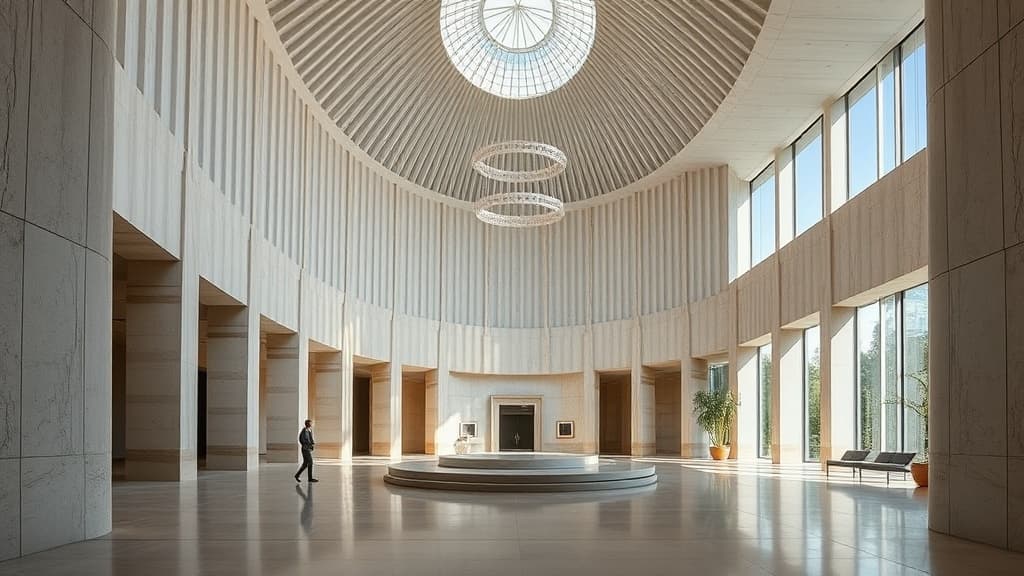
In the hushed, rarefied world of international design competitions, the sequence of events is typically sacrosanct. A brief is issued, proposals are submitted, a jury of esteemed peers deliberates, and a winner is announced to fanfare. The process, built on principles of merit and transparency, culminates in a singular vision deemed worthy of realization. Yet, what happens when the final, most crucial step—the transition from paper to built form—is abruptly halted not by budget or engineering, but by the roar of public dissent? A recent, high-profile reversal in South America offers a stark case study in the shifting tectonics of architectural legitimacy.
The scenario is increasingly familiar: a renowned architectural studio, in collaboration with local partners, triumphs in a prestigious, government-led competition for a national cultural institution. The design, a bold geometric statement, is lauded by the jury for its conceptual clarity and symbolic potency. Announcements are made, renderings are published, and the architectural press celebrates another global landmark in the making. Then, the ground shifts. Public forums ignite with critique, social media amplifies a chorus of concern, and political winds change direction. Almost overnight, the authorities declare the winning design recalled, citing a need to "re-evaluate" in light of public sentiment. The architects are left with a bitter statement about broken transparency, and a profound question hangs in the air: who, ultimately, grants an architectural design the right to exist?
This incident is far more than a local political skirmish; it is a symptom of a fundamental evolution in the relationship between architecture, authority, and society. For decades, the primary validation for major public projects flowed from a top-down model: expert juries, governmental approval, and institutional prestige. The public was often a passive recipient, presented with a fait accompli. Today, digital connectivity and democratized platforms have irrevocably altered that dynamic. The "public" is no longer a monolithic, silent entity but a vibrant, vocal, and often fragmented collective of stakeholders. Their approval, or lack thereof, now constitutes a powerful, informal layer of validation—or veto—that operates parallel to, and can overwhelm, traditional channels.
For architects and interior designers, this new reality demands a radical reconsideration of engagement. The competition phase can no longer be seen as a closed, professional exercise ending with a jury's stamp. It must become the opening act of a much longer, more nuanced conversation with the community. Is the bold, abstract form perceived as an alien imposition or a unifying icon? Does the interior experience feel inviting or intimidating to the local populace it aims to serve? Architectural merit, as defined by light, space, and materiality, must now coexist with, and be enriched by, cultural resonance and social narrative.
This poses a creative and procedural challenge. How does one design for a competition jury while simultaneously designing for a public forum? Some forward-thinking practices are proactively integrating public consultation into their competition workflows, treating early-stage feedback not as a threat but as generative material. Others advocate for competition briefs that mandate and fund meaningful community engagement as part of the submission. The risk, of course, is design by committee, the dilution of visionary ideas into bland consensus. The opportunity, however, is the creation of architecture that is not just *for* the people, but *of* the people, endowed with a legitimacy that transcends changing administrations.
Moreover, this moment forces a reflection on the nature of architectural iconicity. The 20th century was dominated by the signature museum as a global tourist destination, often prioritizing photographic form over local context. The contested museum of today suggests a pivot towards a different kind of icon: one that emerges from dialogue, that embodies collective memory, and whose power derives as much from embraced meaning as from striking silhouette. It calls for a design philosophy that is both confident and humble, assertive and listening.
As editors witnessing the unfolding narrative of global design, we see this not as a failure of architecture, but as its maturation. The recalled design is not necessarily inferior; it may be a masterpiece on paper. Yet, its journey reveals that in our contemporary world, the social and political site is as critical to navigate as the physical one. The future of significant public architecture lies in designs that can win the competition *and* win the conversation, proving that true transparency and integrity extend beyond the selection process and into the very heart of a building's intended community.
Read Also

Interior Design Trends 2027: 8 Practical Directions
We explain the key interior design trends for 2027 with specific examples you can use in your home.
The Palette in Practice: How Global Trends Translate into Local Spaces
Weekly color and design trends move from digital inspiration boards into real-world interiors. We explore how global movements are being adapted in homes from Beirut to Dubai.
Weekly Design & Color Trends: Practical Tips for Homeowners
Our weekly trend report is your cheat sheet for effortlessly weaving the latest colors and design movements into your home, with actionable steps to make your spaces feel fresh.