The Invisible Harvest: How Flooring is Sowing a New Cycle of Sustainability
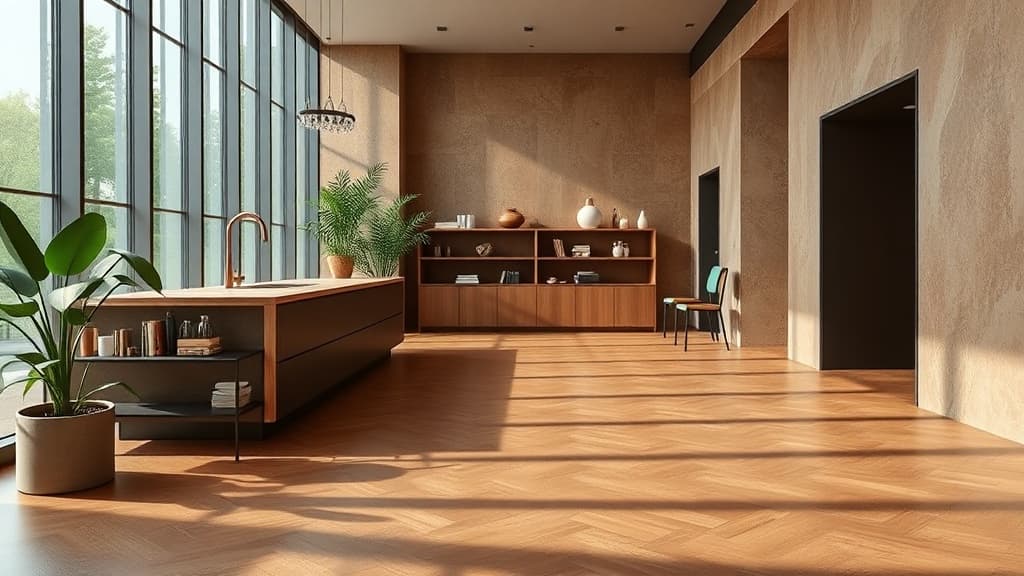
For decades, architectural practice has framed sustainability through a lens of reduction: less energy, less waste, less virgin material. This approach, while vital, often positions the built environment as an end point for conservation, a passive recipient of 'better' products. A quiet revolution is underway, however, that inverts this logic. The most compelling sustainable innovations are no longer merely about doing less harm, but about becoming active participants in biological and social cycles previously considered external to design. The emergence of high-performance architectural materials derived from agricultural by-products—such as cocoa shell waste being transformed into resilient flooring—signals this profound shift. Here, the floor beneath our feet is no longer a terminus, but a link in a regenerative loop, connecting West African farming communities to global design studios.
This represents a move from a linear to a circular economy in its most literal and elegant form. Traditionally, a cocoa bean is harvested, its fruit processed, and its hard shell discarded as waste, a problem to be managed. By viewing this shell not as waste but as a harvestable resource, material science redefines the agricultural process itself. The result is a composite like Marmoleum Cocoa, where up to 98% of the content can be natural, binding materials like linseed oil and wood flour with the textured, fibrous qualities of the shell. The architectural implication is profound: surfaces gain a narrative. They carry within them the history of a specific place and practice, moving beyond generic 'green' credentials to tell a story of circularity.
For architects and interior designers, this evolution demands a new kind of material literacy. Specifying a product is no longer just a question of aesthetics, durability, or even generic sustainability certifications. It becomes an act of economic and ecological curation. Choosing a flooring material woven from cocoa waste is also a choice to support a specific supply chain, to valorise the labour of cacao farmers, and to close a nutrient loop that has been open for centuries. The design specification sheet morphs into a tool for spatial justice and ecological repair. The interior becomes an interface with distant landscapes, making the global local in a tangible, textured way.
This trend also challenges the aesthetic paradigms of sustainable design, which have often been cornered into a palette of unfinished concrete, reclaimed wood, and minimalist austerity. Materials born from agricultural by-products introduce unexpected colour, subtle pattern, and unique tactile qualities derived from their organic origins. The cocoa shell, for instance, lends a natural, speckled variation that synthetic mimics cannot achieve. This allows designers to pursue richness, warmth, and narrative depth without compromising their ethical benchmarks. Sustainability sheds its sacrificial aura and puts on a cloak of cultivated luxury.
The ultimate significance for our industry lies in reimagining the architect's and designer's agency. We are no longer simply consumers of industrial output. By demanding and specifying such materials, we become catalysts for new agricultural and manufacturing partnerships. We help shape markets that see value in what was once valueless. The building becomes an act of cultivation, its surfaces a testament to a harvest that extends far beyond the building site. In this new cycle, beauty is not applied; it is grown, collected, and carefully layered into the spaces we inhabit, proving that the future of design doesn't lie in mining new resources, but in learning to see the abundance we already throw away.
Read Also
The Practical Magic of Light, Material & Space: Real Rooms as Muse
Beyond abstract principles, we find design's true spirit in lived-in spaces. Discover how lighting strategies, material choices, and intelligent layouts converge in inspiring real-world examples.

Three Core Pillars: Actionable Design Upgrades for Your Home
Forget fleeting trends. Discover how to master lighting, materials, and layout—the foundational trio that transforms any room into a functional and beautiful space.
Foundational Triad: The Invisible Rules of Interior Design
Great spaces are built on a silent conversation between three core elements. We explore the timeless principles governing lighting, materials, and layouts.