How to Make Your Home More Energy Efficient
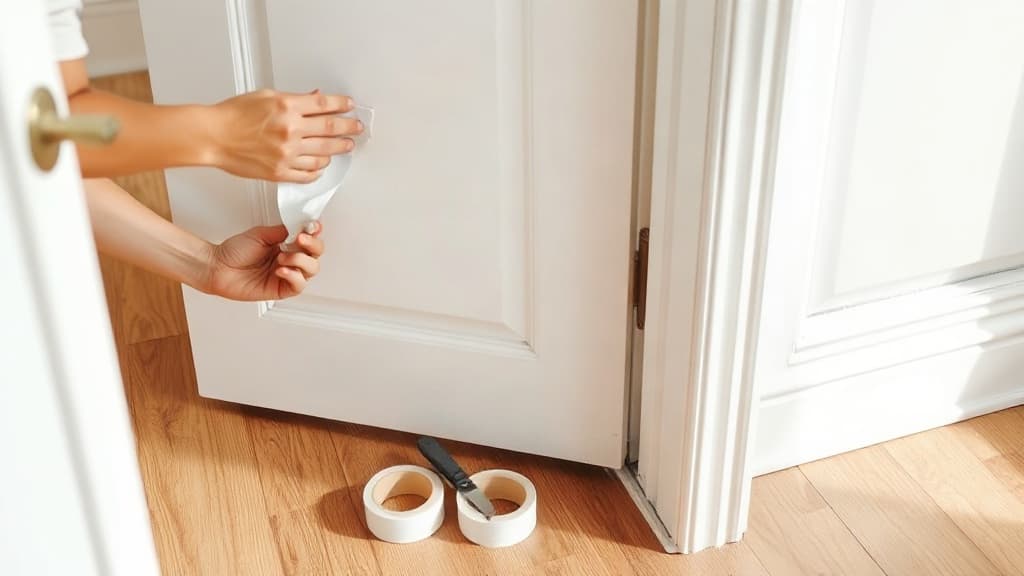
Making your home more energy efficient involves sealing leaks, upgrading insulation, and using smart equipment. You will lower your utility bills and feel more comfortable year-round. This guide covers specific actions, from checking window seals to selecting efficient appliances.
1. Seal air leaks around doors and windows
Air leaks are the biggest source of energy waste in most homes. Check for drafts around all exterior doors and windows. Use weatherstripping to seal gaps around moving parts, like the sides and top of a door. Apply caulk to seal stationary cracks, such as where a window frame meets the wall. A common mistake is sealing the bottom of an exterior door with caulk; use a door sweep instead to maintain function.
For larger gaps, like where plumbing or electrical lines enter the wall, use expanding foam sealant. Pay special attention to the attic hatch or door, as warm air rising can escape there. A simple test is to hold a lit incense stick near potential leaks on a windy day; if the smoke wavers, you have a draft. Sealing these leaks is the most cost-effective first step, often costing less than $50 in materials for significant impact.
2. Upgrade your attic insulation
Insufficient attic insulation lets heat escape in winter and enter in summer. The recommended level (R-value) for attic insulation is typically R-38 to R-60, which is about 30 to 50 cm (12 to 20 inches) of blown-in fiberglass or cellulose. If you can see the ceiling joists in your attic, you likely need more insulation. Adding insulation is a straightforward DIY project with blown-in material, but wear proper protective gear.
Do not compress insulation, as this reduces its R-value. Ensure insulation baffles are installed at the eaves to maintain proper ventilation and prevent ice dams in cold climates. Before adding new insulation, make sure all air leaks from the living space below are sealed. This prevents moist air from reaching the cold attic and causing condensation and mold, which insulation alone cannot fix.
3. Install a programmable or smart thermostat
A programmable thermostat automatically lowers heating or cooling when you are asleep or away. Setting the temperature 7-10 degrees Fahrenheit (4-6 degrees Celsius) lower for 8 hours a day can save about 10% annually on heating and cooling. For heat pumps, use a thermostat designed for them to avoid unnecessary use of the backup electric heat.
Smart thermostats learn your schedule and can be controlled remotely. They provide reports on your energy use, helping you identify patterns. Ensure the thermostat is installed on an interior wall, away from direct sunlight, drafts, and heat sources like lamps. A common error is placing it where it gets a false reading, causing the system to run too much or too little.
4. Switch to LED lighting
Replace all incandescent and CFL bulbs with LEDs. An LED bulb uses at least 75% less energy and lasts 25 times longer than an incandescent bulb. They are now available for almost every fixture, including dimmable and three-way models. Start with the lights you use most, like kitchen under-cabinet lights or living room lamps.
When buying LEDs, look for the lumens number, not watts, to gauge brightness. A 60-watt incandescent equivalent is about 800 lumens. Choose bulbs with a Color Rendering Index (CRI) of 90+ for truer colors, especially in task areas. For outdoor security lights, use LEDs with motion sensors to ensure they are only on when needed, further cutting energy use.
5. Maintain your heating and cooling system
A poorly maintained HVAC system can use 15% more energy. Change the air filter every 1-3 months; a dirty filter restricts airflow and makes the system work harder. For central air conditioners and heat pumps, clean the outdoor condenser coil annually by gently hosing off debris. Ensure plants are trimmed back at least 60 cm (2 feet) from the unit for proper airflow.
Have a professional technician perform a tune-up for your furnace and air conditioner once a year. They will check refrigerant levels, test for combustion efficiency, and ensure all components are working correctly. If your system is over 15 years old, consider replacing it with a high-efficiency model, which can cut related energy use by 20-40%. Look for models with a high SEER rating for cooling and a high AFUE rating for heating.
6. Use efficient window coverings and treatments
Windows are a major source of heat gain and loss. In summer, close blinds, shades, or curtains on sun-facing windows during the day to block solar heat. Cellular shades, with their honeycomb design, trap air and provide excellent insulation. For a budget option, white-backed blackout curtains can reflect summer heat away from the window.
In winter, open coverings on south-facing windows on sunny days to let in free heat, and close them at night to add an insulating layer. For a more permanent solution, consider installing storm windows or applying insulating window film. This low-E film is nearly invisible and reflects heat back into the room. Remember, the best window covering is useless if there is a draft; always seal leaks first.
7. Upgrade to energy-efficient appliances
When replacing old appliances, choose ENERGY STAR certified models. An ENERGY STAR refrigerator uses about 9% less energy than a standard new model, and a certified dishwasher uses about 12% less energy and 30% less water. For water heating, which is often the second-largest energy expense, consider a heat pump water heater; it can be two to three times more energy efficient than a conventional electric model.
Size matters: a too-large refrigerator or washing machine will waste energy. For a family of four, a refrigerator with 550-700 liters (19-25 cubic feet) is usually sufficient. Run your dishwasher and washing machine only when full, and use air-dry settings when possible. Unplug electronics and chargers when not in use, or use a smart power strip to cut phantom load, which can account for 5-10% of home energy use.
8. Insulate hot water pipes and the water heater
Insulating exposed hot water pipes, especially in unheated spaces like basements or crawlspaces, reduces heat loss. This means you wait less time for hot water at the tap and waste less water and energy. Use pre-slit foam pipe insulation that matches your pipe diameter; for 1.9 cm (3/4 inch) pipes, use insulation with a 1.9 cm (3/4 inch) inner diameter. Secure it with foil tape.
If your water heater tank feels warm to the touch, it needs an insulating blanket. This is most effective for older tanks without much internal insulation. Modern tanks often have sufficient insulation, so check the manual first. When insulating the tank, do not cover the thermostat, top, bottom, burner compartment (for gas), or pressure relief valve. Proper insulation can reduce standby heat losses by 25-45%.
9. Consider your home's overall envelope
Your home's envelope—its walls, roof, windows, and floors—is its thermal boundary. Beyond the attic, consider wall insulation. While adding insulation inside finished walls is difficult, it may be worth it during a major renovation. For older homes with uninsulated walls, blown-in cellulose or fiberglass can be installed through small holes drilled in the exterior siding or interior plaster, which are then patched.
Check insulation in floors above unheated garages or crawlspaces. The underside of the floor should be insulated to at least R-19. Ensure crawlspace vents are closed in winter if the space is unheated, and consider encapsulating the crawlspace with a vapor barrier. A well-sealed and insulated envelope is the foundation of efficiency; all other upgrades work better within it. For more advanced strategies, explore our archive for more Building Solutions & Sustainability ideas.
Looking for more? Browse more Building Solutions & Sustainability ideas.
Key takeaways
Seal air leaks first, as they undermine insulation and HVAC efficiency. Upgrade attic insulation to at least R-38 for the biggest thermal improvement. Replace lighting and appliances with ENERGY STAR models as they fail. A smart thermostat and proper HVAC maintenance ensure your systems run only as needed and at peak performance.
Frequently Asked Questions
What is the first thing I should do to improve home energy efficiency?
Seal air leaks around windows, doors, and attic openings. This is the most cost-effective step, as drafts force your heating and cooling systems to work much harder, wasting energy regardless of other upgrades you make.
How much attic insulation do I need?
Most climates require an R-value of R-38 to R-60 in the attic, which translates to about 30 to 50 cm (12 to 20 inches) of blown-in insulation. If you can see the tops of your ceiling joists, you definitely need more.
Are smart thermostats worth the cost?
Yes, for most homes. By automatically lowering temperatures when you are asleep or away, they can save about 10% on heating and cooling bills annually. Many utility companies offer rebates that reduce the initial cost.
Should I replace my old windows to save energy?
Not necessarily as a first step. Sealing leaks and adding storm windows or insulating window film is often more cost-effective. If windows are single-pane, drafty, and need replacement anyway, choose double-pane, low-E, gas-filled units.
Read Also
When Inspiration Meets Earth: Building Solutions with Global Roots
From repurposed fishing nets to ancient wind towers, discover how global vernacular wisdom is fueling today's most innovative and beautiful sustainable architecture.
Your Sustainable Home Starts Here: Everyday Upgrades That Make a Difference
Sustainability isn't just a buzzword for new builds. Discover practical, actionable upgrades any homeowner can implement to enhance comfort, save money, and build a greener future.
The Silent Dialogue of Architecture: How Materials, Light, and Detail Converse
Beyond efficiency, true sustainability emerges from the eloquent conversation between enduring materials, sculpted light, and meticulous detail, creating spaces that are both timeless and responsible.