Small Garden Design Ideas: 10 Practical Layouts
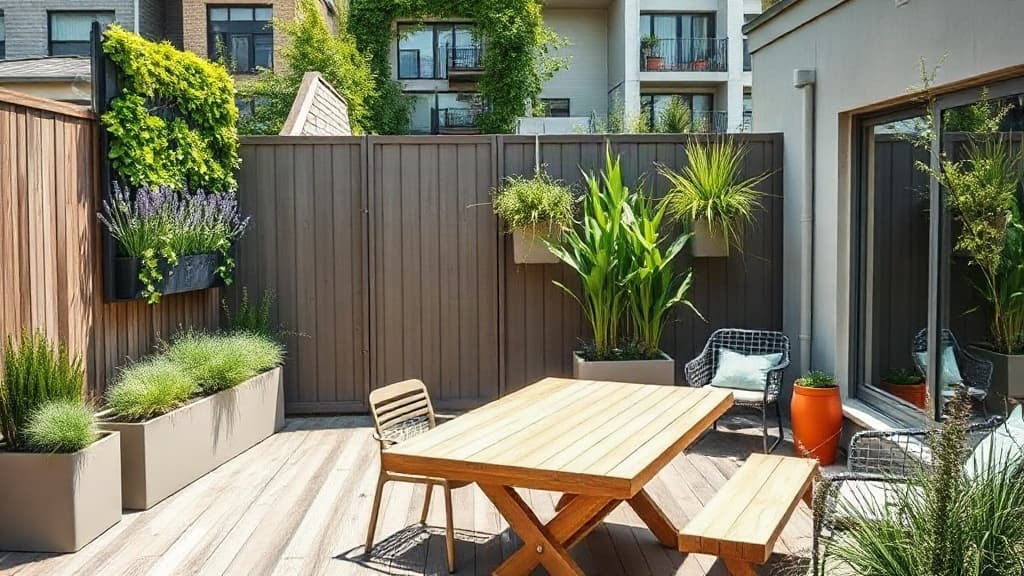
Small gardens require smart planning to feel spacious and useful. You can create distinct zones for dining, relaxing, and growing plants by using vertical space, choosing the right furniture, and selecting plants for scale. The goal is a garden that works for your lifestyle.
1. Define Your Zones Clearly
Start by dividing your garden into clear functional areas. A typical small garden might have a dining zone, a lounging zone, and a planting zone. Keep pathways between zones at least 60 cm (24 inches) wide for comfortable movement. Use different ground materials to visually separate each zone; for example, use decking for the dining area, gravel for the lounging spot, and planting beds for greenery.
A common mistake is trying to fit too many zones into a tiny space, which makes everything feel cramped. Instead, prioritize two key zones. If you love dining outside, make that your primary area with a compact table and chairs. Use lightweight, stackable furniture that can be stored away to keep the space flexible.
2. Go Vertical with Planting
Use walls and fences for growing plants to free up valuable ground space. Install wall-mounted planters, trellises, or a simple system of hooks and shelves. For climbing plants like clematis or jasmine, attach a trellis panel directly to a wall. Ensure planters are at least 20 cm (8 inches) deep for adequate root growth and have proper drainage holes.
Choose plants that thrive in vertical conditions. Herbs like thyme and rosemary do well in sunny wall pockets. For shady walls, consider ferns or ivy. Avoid letting plants grow too thick or heavy, as this can damage structures and block light. Regular pruning keeps vertical gardens tidy and healthy.
3. Choose Furniture for Scale
Select furniture that fits the proportions of your garden. A bistro set with a table 70 cm (28 inches) in diameter and two chairs is ideal for a compact dining area. For lounging, a single bench 120 cm (47 inches) long is better than a bulky sofa. Leave at least 60 cm (24 inches) of clearance around furniture for easy access.
Materials matter for small spaces. Light-colored, slim-profile furniture in materials like powder-coated steel or teak appears less heavy. Avoid dark, oversized pieces that visually shrink the space. Foldable or nesting tables and chairs offer flexibility, allowing you to reconfigure the space for different occasions.
4. Use Mirrors to Create Depth
Strategically placed mirrors can double the visual size of a small garden. Fix a large, weatherproof mirror to a fence or wall at the end of a sightline. Ensure it reflects a pleasant view, like a planted area, not a bare wall or storage unit. Use a mirror with a simple frame or no frame to avoid a cluttered look.
Position the mirror where it will catch light but not create a glare. A north-facing wall is often a good spot. Safety is crucial; secure the mirror firmly and consider using acrylic safety mirrors instead of glass. This trick adds immediate perceived space without taking up any physical room.
5. Install Tiered Planting
Build height and interest with tiered planting. Use raised beds of different heights or stack planters on shelves. A simple design is three rectangular planters, each 30 cm (12 inches) tall, staggered at different levels. This creates layers of greenery without spreading out. Fill the bottom tier with low-growing plants like sedum, the middle with medium-height lavenders, and the top with taller grasses.
This approach organizes your plants and makes maintenance easier. Ensure each tier gets enough sunlight; don't let taller plants shade the ones below. Use a consistent material, such as cedar or corten steel, for all tiers to create a cohesive look. Tiered planting is a practical alternative to a single, sprawling flower bed.
6. Focus on Flooring Contrast
Define zones and add texture with contrasting flooring materials. For a dining area, use smooth, stable materials like porcelain pavers or composite decking. For a lounging or pathway zone, use loose materials like pea gravel or bark chippings. The change underfoot clearly marks the transition from one zone to another.
Keep patterns simple. Large-format pavers, like 60x60 cm (24x24 inch) squares, make a space look larger than small, busy cobbles. For gravel, choose a light color like buff or grey to reflect light. Ensure all flooring is properly installed with a solid, level base and adequate drainage to prevent pooling water.
7. Select Multi-Functional Pieces
Incorporate elements that serve more than one purpose. A bench with built-in storage underneath provides seating and hides garden tools. A planter box can double as a low partition between zones. A water feature can provide a soothing sound and attract birds, adding life to the garden.
When choosing multi-functional furniture, prioritize durability and weather resistance. Storage benches should have drainage holes and be made from treated wood or plastic resin. Avoid pieces with complicated mechanisms that might rust or break. This strategy reduces clutter and maximizes every square centimeter of your garden.
8. Plan for Year-Round Interest
Choose plants and materials that look good in all seasons. Evergreen shrubs like boxwood or skimmia provide structure in winter. Incorporate plants with interesting bark, like birch, or winter berries, like holly. Use evergreen climbers on trellises to maintain green walls year-round.
Add elements with permanent structure, such as an ornamental tree in a large pot or a sculptural piece. Avoid designing a garden that relies solely on summer annuals, which leave the space bare for months. For more inspiration on creating enduring outdoor spaces, explore more Public & Landscape Projects ideas on our site.
9. Control Scale with Plant Choices
Select plants that won't outgrow the space. Dwarf varieties of trees, like Japanese maple 'Dissectum', are perfect for small gardens. Choose shrubs that respond well to pruning, such as lavender or hydrangea. Avoid fast-growing hedges or trees with invasive root systems.
Plant in layers: ground cover, mid-height shrubs, and one focal tree or tall grass. This creates depth without overcrowding. A typical mistake is planting small specimens too close together; always check the mature spread listed on the plant tag and space them accordingly. Proper scaling makes maintenance manageable.
10. Illuminate Thoughtfully
Good lighting extends the use of your garden into the evening and adds atmosphere. Use low-voltage LED lights for safety and efficiency. Focus on three types: path lights to mark walkways, uplights to highlight a feature tree or wall, and subtle ambient light for dining areas.
Avoid overly bright, white lights that create harsh shadows. Warm white LEDs (2700K-3000K) are more inviting. Place path lights about 30 cm (12 inches) high and space them 1.5 to 2 meters (5 to 6.5 feet) apart. For uplighting, position the fixture at the base of the feature, aiming upward. Always conceal the light source itself to avoid glare.
Looking for more? Browse more Public & Landscape Projects ideas.
Key takeaways
Define clear zones for different activities. Use vertical space for planting to save ground area. Choose furniture and plants that are correctly scaled for the size of your garden. Good lighting and multi-functional pieces increase usability and enjoyment.
Frequently Asked Questions
What is the best furniture for a very small garden?
Choose lightweight, foldable, or stackable pieces. A bistro set with a 70 cm table is ideal. Benches with built-in storage serve dual purposes. Avoid bulky furniture; leave at least 60 cm of clearance around it for movement.
How can I make my small garden look bigger?
Use mirrors on walls to reflect light and views. Define zones with contrasting flooring materials like decking and gravel. Choose large-format pavers (60x60 cm) and limit color palettes. Vertical planting on trellises saves ground space.
What plants work well in a small vertical garden?
Herbs like thyme and rosemary thrive in sunny wall pockets. For shade, use ferns or ivy. Climbing plants like clematis need a trellis. Ensure planters are at least 20 cm deep with drainage holes to support healthy root growth.
How do I light a small garden properly?
Use warm white LED lights (2700K-3000K). Install low path lights 30 cm high along walkways. Add uplights to highlight a feature tree or wall. Conceal the light source to avoid glare and create a soft, inviting atmosphere after dark.
Read Also
Passive House Design: 8 Core Principles Explained
Learn the eight core Passive House design principles that create homes using up to 90% less energy for heating and cooling.
15 Small Cafe Interior Design Ideas to Maximize Your Space
Learn how to design a small cafe with layout, furniture, and lighting strategies that make the space feel larger and function smoothly.
10 Modern House Exterior Design Ideas You Can Use
Ten specific ideas for modern house exteriors, covering materials, forms, and details. Get concrete advice you can apply to your own project.