Feature
The Public Lexicon: How Materials, Light and Detail Write Urban Narratives
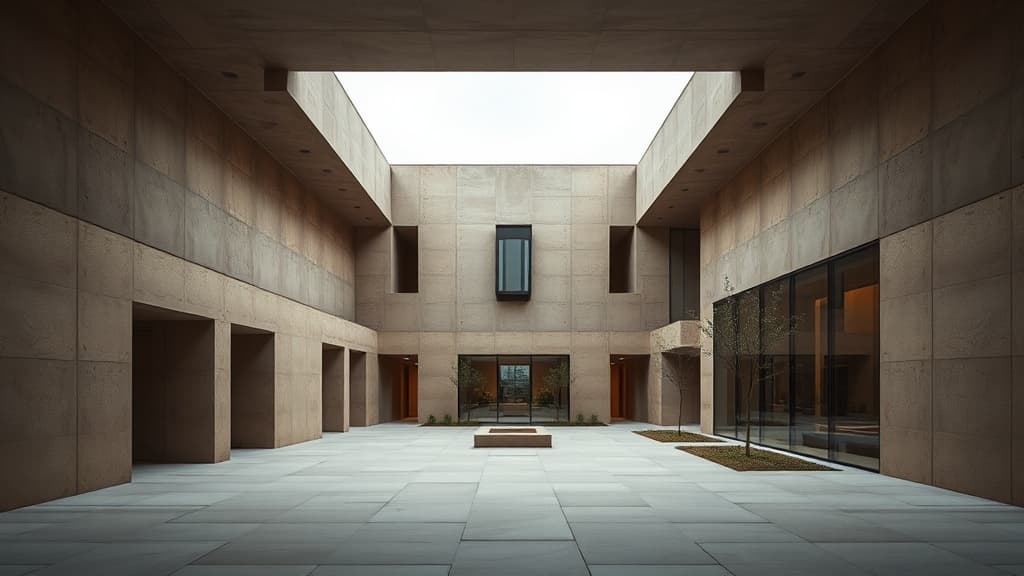
Architecture's most profound dialogues often happen not within private walls, but in the shared spaces between them. Public and landscape projects—the plazas, parks, waterfronts, and civic nodes—represent a unique design challenge where the 'client' is an entire community. Here, success is measured not in square footage, but in social resonance, and it is through the masterful orchestration of materials, light, and detail that these spaces find their voice. This triad of elements acts as a fundamental lexicon, a grammar that designers employ to compose spaces of invitation, reflection, and enduring civic memory.
Materials are the tangible text of the public realm. Unlike interiors, which can be refurbished, public landscapes must endure decades of sun, rain, footfall, and collective memory. The choice is therefore a covenant with the future. Modern public projects increasingly eschew the generic for the narrative-rich. Weathered Corten steel tells a story of time and patina; locally quarried stone roots a plaza in its geological context; permeable gravel speaks to environmental stewardship. In a park in Copenhagen, the varied textures of brick underfoot—smooth, ribbed, cobbled—guide the visitor subtly, creating zones of pause and procession without a single sign. The material is not just surface; it is instruction, history, and sensory guide.
If materials provide the substance, then light—both natural and artificial—provides the soul and rhythm. Daylight transforms a space hourly, casting long morning shadows across a granite bench or flooding a noon courtyard with equanimous brightness. The designer's role is to choreograph this daily performance. A canopy of pleached trees dapples light on a pathway, creating a calming, ever-shifting pattern. As dusk falls, artificial light takes the stage, not merely for safety but for drama and wayfinding. Uplighting a stand of birch trees can transform a grove into a cathedral of vertical lines; a linear LED strip embedded in a handrail can trace the gentle curve of a bridge, making the structure itself glow. This interplay creates a temporal dimension, ensuring the space offers a different character at dawn, midday, and night.
The final layer, often the most intimate, is detail. This is the scale of the human hand, the close-up encounter. It's the precise joint where two materials meet, the pattern cast by a perforated screen, the gentle roll of a stone coping on a seat wall meant for lingering. In a masterful public project, these details are not afterthoughts but the very points of connection. They invite touch, close inspection, and personal discovery. A beautifully detailed bronze handrail, warmed by the sun, offers a tactile pleasure. A mosaic inset in a concrete pavement becomes a moment of surprise, a small gift for the observant walker. It is through these carefully considered moments that a large public space becomes human-scaled and memorable.
Ultimately, the most successful public landscapes are those that speak quietly but profoundly through their material honesty, their luminous atmosphere, and their thoughtful details. They become beloved not for their grandeur, but for the countless small, personal experiences they facilitate. To explore how these principles manifest in other architectural typologies, we invite you to [see more Architecture stories](/architecture/public-landscape).
Read Also

Feature
The Spark Before the Blueprint: How Expert Narratives Shape Design
Moving beyond curated visuals, we explore how candid conversations with leading architects and designers reveal the raw, human inspiration behind iconic spaces and practical, adaptable solutions.
Guide
Turning Expert Insights into Action: A Homeowner's Playbook
Our deep-dive interviews with top designers yield more than inspiration; here’s how to translate their wisdom into tangible, everyday improvements for your own space.

Feature
The Language of Space: How Materials, Light & Detail Speak
Architecture's most profound conversations are unspoken, conducted through the deliberate interplay of substance, shadow, and refinement. We listen in.