The Unbuilt Future: When Architectural Ambition Collides With Political Change
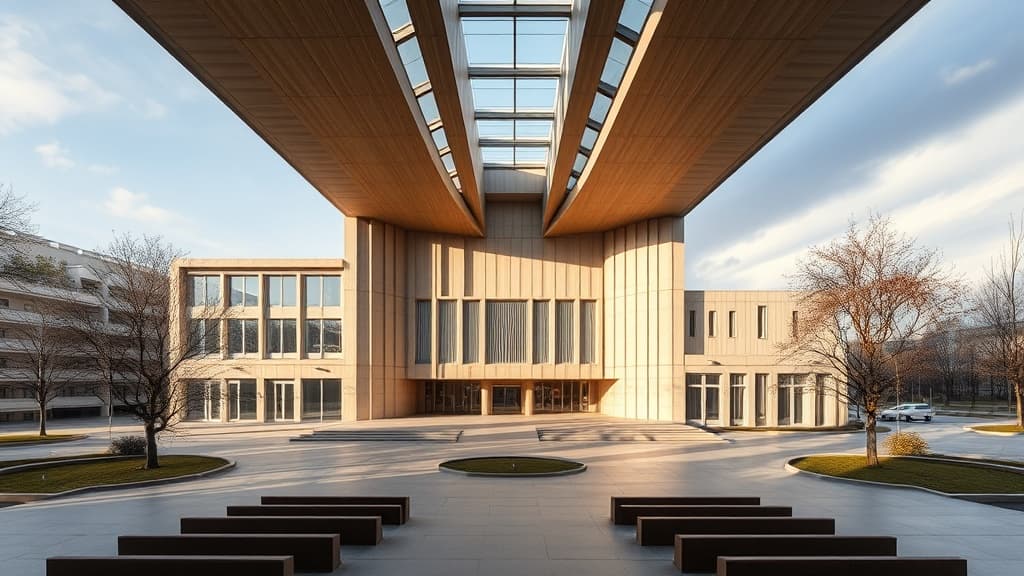
In the heart of Georgia's capital, on the banks of the Mtkvari River, lies a pair of gleaming, tubular structures that have become a ghost of a future that never arrived. Designed by a renowned Italian architectural firm, these sinuous forms of steel and glass were conceived as beacons of culture: a music theater and an exhibition hall. For over a decade, they have stood in Rike Park not as vibrant hubs of artistic life, but as silent, empty monuments to ambition, controversy, and ultimately, political rupture. Their recent approval for demolition is not merely the end of two buildings; it is the final chapter in a story about the precarious life of architecture in the crossfire of ideology.
The saga of these structures, often colloquially dubbed "the tubes," is a masterclass in how architectural value is negotiated—and often negated—outside the drafting room. Commissioned under one political administration with a vision for a modern, outward-looking Tbilisi, the complex's very form became a canvas upon which subsequent political narratives were painted. Its avant-garde, foreign-designed aesthetic, once celebrated as progressive, was later recast by new authorities as an alien imposition, a costly relic of a discredited past. This transformation from cultural icon to political symbol illustrates a harsh truth for architects and designers: a building's meaning is never fixed at completion; it is perpetually under construction by those in power.
For readers of Archdeco, this case study transcends local Georgian politics. It poses fundamental questions about the lifecycle and legacy of contemporary design. What is the responsibility of an architect or designer when their work becomes a pawn in political conflict? The structures in Rike Park were technically complete, yet they were never officially inaugurated or put to their intended use. They existed in a state of pure potential, a 'what could have been' made concrete. This limbo state raises critical issues about programmatic flexibility and cultural sustainability. Was the design too specific, too tied to a singular vision that could not survive a change in governance? Could more adaptable, polyvalent interiors have salvaged its purpose, even under a new regime?
The interior design challenge here is profound, if tragically unfulfilled. The tubular spaces promised unique acoustic and spatial experiences for performance and display. Their abandonment means we will never know how those interiors would have shaped the cultural life of the city. This loss is not just physical; it is the loss of experiential knowledge, of understanding how such a bold architectural gesture functions in lived reality. It serves as a cautionary tale for designers championing highly specific, signature forms: without broad-based and enduring civic buy-in, the most innovative space can remain an empty shell.
Ultimately, the impending demolition speaks to the vulnerability of architecture as a long-term cultural project. Buildings are not mere shelters; they are investments in collective identity and memory. When that identity is contested, architecture often bears the brunt. The Rike Park complex becomes a metaphor for un-reconciled histories. Its erasure from the skyline is an attempt to erase a chapter of the city's story, a practice as old as empires but newly relevant in an era of rapid urban change and political polarization.
For our community of architects and interior designers, this story is a call for deeper engagement with the socio-political ecosystems into which we build. It urges us to consider not only the aesthetic and functional life of a design but also its political life. Can our creations build bridges that outlast administrations? Can they embody values robust enough to transcend partisan interpretation? The tubes of Tbilisi, in their silent, stubborn presence, asked these questions. Their absence will now answer them with a stark, negative space—a reminder that in the battle between brick and ballot, the ballot often holds the wrecking ball.
Read Also
From Urban Plazas to Verdant Corridors: Where Vision Meets Public Need
Exploring how groundbreaking public landscapes draw inspiration from their surroundings and serve as dynamic, real-world classrooms for designers.
Everyday Landscapes: How Public Design Principles Can Transform Your Home
Great public spaces aren't just beautiful; they're practical. We reveal their design secrets to help you craft a more functional and inviting home.
The Public Tapestry: Weaving Place with Material, Light, and Craft
How the intricate interplay of substance, illumination, and meticulous detail transforms shared landscapes into profound civic experiences.