The Unspoken Grammar: How Materials, Light & Detail Write Minimalism's Story
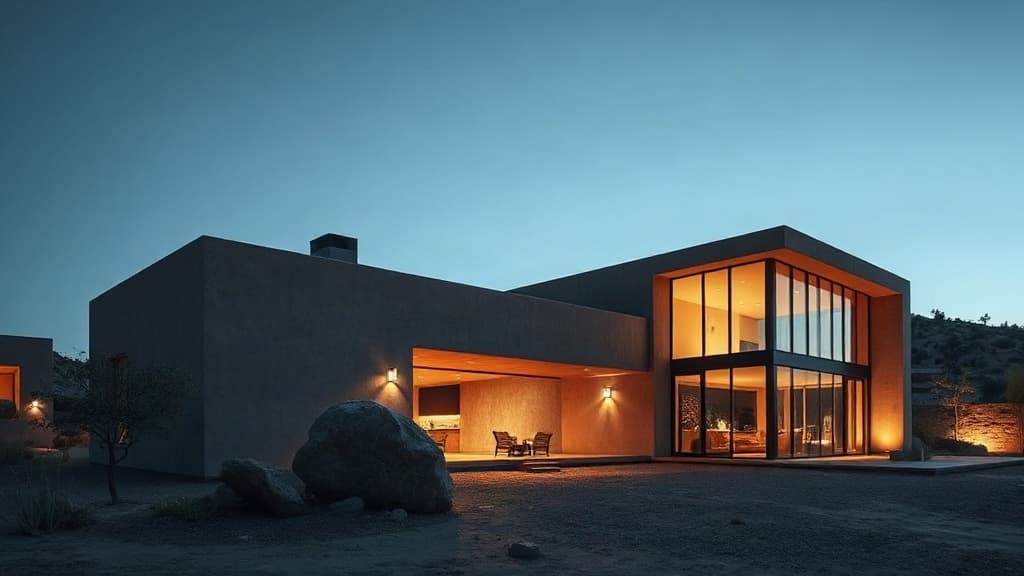
To misunderstand minimalism as mere austerity is to miss its true poetry. It is a philosophy not of absence, but of profound presence. Beyond the decluttered white box lies a sophisticated design language, a grammar where every element must earn its place. This language is spoken not in broad strokes, but through the deliberate interplay of three core principles: the honesty of materials, the choreography of light, and the resonance of meticulous detail.
Material, in the minimalist lexicon, is never anonymous. The style demands truthfulness. It eschews ornamentation and veneers in favour of celebrating the innate character of the substance itself. A honed concrete wall is left to express its granular texture; a slab of solid oak reveals its natural grain as its sole pattern; a vein of marble is allowed to be the artwork. The focus shifts from applied decoration to inherent quality. The cold precision of polished stainless steel might converse with the warm tactility of woven wool, creating a dialogue of contrasts that is rich precisely because it is restrained. Here, material is not hidden; it is exalted in its raw, unadulterated state.
If materials form the vocabulary, then light is the syntax that gives them meaning. In a minimalist space, light is the primary medium for shaping form and defining atmosphere. It is meticulously considered—often through architectural means like strategically placed clerestory windows, skylights, or deep reveals. Natural light washes across a plaster wall, revealing its subtle undulations throughout the day, casting long, evolving shadows that become a kinetic, time-based installation. Artificial light is treated with equal reverence: a single, precisely aimed recessed downlight can transform a simple shelf into a floating plane, while a linear LED concealed within a ceiling cove can make a wall appear to dematerialize. The play of light and shadow becomes the primary source of dynamism and texture.
The final, and perhaps most critical, element is detail. In the absence of visual noise, every junction, every edge, every transition speaks volumes. This is where craftsmanship ascends to artistry. A perfectly executed shadow gap between a wall and floor creates a sense of weightlessness. The fine mitre of a stone countertop, joined so seamlessly it appears as a single, flowing form, demonstrates a commitment to precision. The choice of a discreet, flush-mounted door pull over a protruding handle is a detail that maintains an uninterrupted plane. These are not afterthoughts; they are the quiet signatures of thoughtful design, the elements that transform a sparse room into a deeply resonant and human-centred environment. To appreciate this nuanced approach to spatial poetry, see more Styles stories.
Read Also
Minimalist Interior Design Ideas for a Calm Home
Practical ideas for a minimalist home, from choosing furniture to hiding clutter. Learn how to use color, light, and storage.
The Space Between Things: How Minimalism Finds its Heart in Empty Corners
Forget stark austerity. True minimalist design thrives in the thoughtful balance between object and void, creating spaces for inspiration, calm, and life itself.
The Intentional Home: Adopting Minimalism as a Daily Practice
Minimalism is more than an aesthetic; it's a practical philosophy for creating a serene and functional living environment. Discover actionable strategies to declutter your space and mind.