The Value We Lost: When Heritage Preservation Hits a Financial Wall
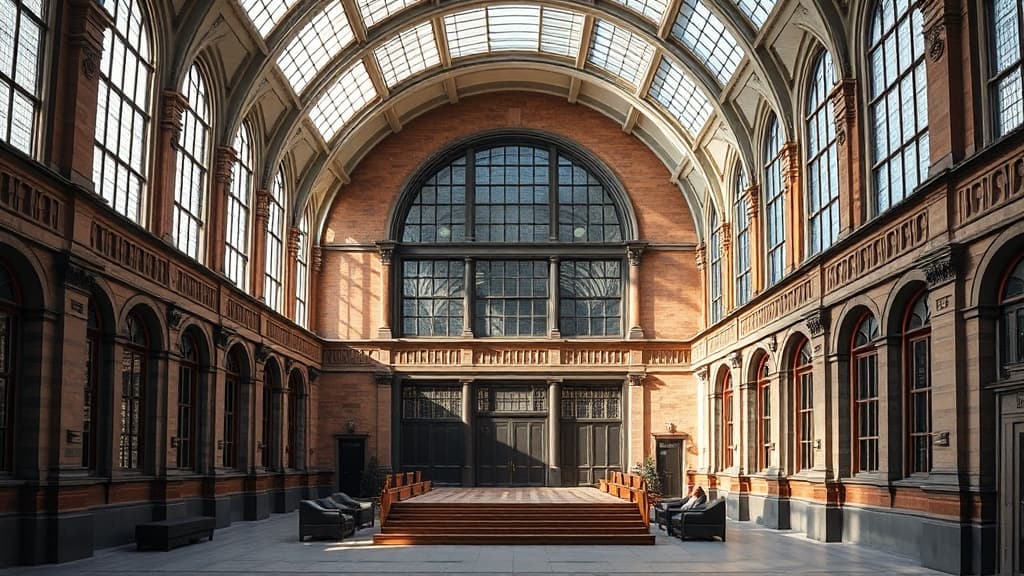
Architecture endures. It is a foundational belief, implicit in every stone laid, every beam raised. We build not for the moment, but for generations. Yet, the recent, sobering announcement from a renowned institution—that the funds necessary to resurrect its fire-ravaged, iconic heart simply do not exist—forces a painful confrontation with reality. The unspoken contract between architect and eternity has been broken, not by a failure of vision or craftsmanship, but by arithmetic. This moment transcends a single building; it is a stark signal flare illuminating a crisis facing our shared architectural heritage: the escalating conflict between cultural value and financial viability.
For architects and designers, our work is an act of faith in the future. We imbue spaces with narratives, materials with meaning, believing these creations will outlive us. Charles Rennie Mackintosh’s Glasgow School of Art was a masterpiece of this faith—a building that was not merely a container for learning but an active pedagogical tool, its every detail a lesson in proportion, light, and artistry. Its loss, followed by the inability to rebuild, is a double trauma. First, the physical destruction. Second, and perhaps more insidiously corrosive, the destruction of the belief that society will marshal the resources to restore what it claims to cherish. This creates a chilling precedent. If *this* building cannot be saved, what can?
The financial equation of heritage restoration is brutally complex. Modern building codes, material sourcing for historical accuracy, specialized artisan labor, and the sheer scale of a faithful reconstruction create a budget that balloons far beyond initial estimates. For publicly funded institutions or charities, these sums become astronomical. The question then shifts from ‘how’ to ‘why’—a dangerous pivot for cultural assets. We are forced to quantify the intangible: What is the value of a landmark that shapes a city's identity? How do you price the inspiration drawn by countless students and visitors? In boardrooms and budget meetings, these profound questions are often reduced to line items, where they compete with operational costs, staff salaries, and new initiatives.
This crisis presents a critical juncture for the design community. It demands we evolve our role from creators to advocates and strategists. Preservation can no longer be a reactive endeavor, beginning only after disaster strikes. Architects must lead in integrating robust, pre-emptive risk management and resilience planning into the very conception of culturally significant projects. This includes advocating for and designing sophisticated fire suppression systems that respect historic fabric, using advanced digital documentation like laser scanning to create ‘digital twins,’ and establishing dedicated, ring-fenced endowment funds at the project's inception, not as an afterthought.
Furthermore, the conversation must expand beyond mere replication. While the ideal is faithful restoration, financial reality may necessitate a more nuanced approach. Could a hybrid solution—where the restored shell houses a respectfully modern, functionally superb interior—be a more sustainable model? This is not surrender, but a potential evolution of heritage practice, one that acknowledges continuity while allowing for contemporary life. The challenge is to do this without erasing the genius of the original, a task requiring immense design sensitivity.
Ultimately, the story of a lost Mackintosh is a parable for our time. It underscores that the guardianship of architectural heritage is not a passive act of nostalgia but an active, expensive, and ongoing commitment. For readers of Archdeco, whether you design private villas or public institutions, the lesson is clear: the value we assign to design must be reflected not only in aesthetics but in tangible, long-term stewardship strategies. The buildings we love are not just assets on a balance sheet; they are the physical corpus of our collective memory and creativity. When we allow them to be defined solely by cost, we risk impoverishing not just our skylines, but our cultural soul. The wall we have hit is not just financial; it is a test of our values.
Read Also
From Urban Plazas to Verdant Corridors: Where Vision Meets Public Need
Exploring how groundbreaking public landscapes draw inspiration from their surroundings and serve as dynamic, real-world classrooms for designers.
Everyday Landscapes: How Public Design Principles Can Transform Your Home
Great public spaces aren't just beautiful; they're practical. We reveal their design secrets to help you craft a more functional and inviting home.
The Public Tapestry: Weaving Place with Material, Light, and Craft
How the intricate interplay of substance, illumination, and meticulous detail transforms shared landscapes into profound civic experiences.